This guide covers typical pricing, how booking works, and what most crews will and will not take. It is written for people who want a straightforward service and a clean finish.
What counts as green waste for green waste removal in Sydney?
For green waste removal in Sydney, green waste usually means organic garden material that can be composted or mulched. Most providers accept loose leaves, grass clippings, weeds, branches, palm fronds, hedge trimmings, and small tree offcuts.
They often ask that waste is kept free from plastics, metals, treated timber, and general rubbish. If contamination is mixed in, it can change pricing or require separate disposal.
What does green waste removal in Sydney typically cost?
Green waste removal in Sydney is commonly priced by volume, access, and labour time. Many providers quote by trailer load, ute load, or cubic metres, with extra charges if the job requires heavy cutting, bagging, or multiple trips. These pricing structures are similar to the transparent service standards followed by Trees Down Under, a Sydney’s premier tree removal company.
As a rough guide, a small pick-up might suit a few bags and prunings, while a full trailer can handle a large garden clean-up. For accurate numbers, they normally request photos, an on-site quote, or a quick video walk-through.
What affects the price of green waste removal in Sydney?
The biggest cost drivers for green waste removal in Sydney are weight, density, and handling. A light pile of hedge clippings is faster and easier than wet grass, thick branches, or palm trunks.
Access also matters. If crews must carry waste up stairs, through narrow side paths, or from a backyard with no direct entry, labour time rises. Some providers also factor in parking difficulty, tip fees, and whether sorting is needed to keep the load “green-only”.
How do they book green waste removal in Sydney quickly?
Most companies make green waste removal in Sydney bookable online, by phone, or via SMS. The fastest method is usually sending clear photos showing the pile, the access path, and any oversized branches.
They then confirm a price range, available time windows, and whether the customer needs to prepare anything. Many can offer same-day or next-day slots, but peak times after storms or long weekends can book out early.
What preparation helps green waste removal in Sydney go smoothly?
For green waste removal in Sydney, preparation is mainly about access and clarity. They typically ask that cars are moved from driveways, gates are unlocked, and pets are secured.
If waste is spread across the yard, consolidating it into one or two piles can reduce labour time. They may also request that large branches are placed with cut ends facing one direction, making loading quicker and safer.
What gets taken during green waste removal in Sydney?
In most cases, green waste removal in Sydney includes garden organics such as branches, leaves, grass, weeds, bark, and shrub cuttings. Many teams also take small tree sections and palm fronds, provided they can lift them safely and fit them into the vehicle.
If the job is part of a garden tidy-up, they may also rake, sweep, and collect loose material, depending on what was agreed at booking.
What does not get taken with green waste removal in Sydney?
Green waste removal in Sydney usually excludes general household rubbish, soil, rocks, concrete, tiles, and construction waste unless a mixed-waste service is booked. Treated timber, painted wood, plastic pots, hose pieces, and fertiliser bags are common contaminants they will want removed from the pile.
If there is uncertainty, providers normally prefer customers to ask first and send photos. That avoids a re-quote on arrival or a partial pick-up.
Do they recycle or mulch after green waste removal in Sydney?
Many operators aim to divert material from landfill, and green waste removal in Sydney is often processed into mulch or compost where facilities allow. That said, disposal pathways vary by provider, location, and contamination levels.
If recycling outcomes matter, customers can ask where the load is tipped and whether green-only loads are separated. Providers who focus on garden waste typically have clearer processes for keeping it organic and reusable.
Is green waste removal in Sydney cheaper than council options?
For small amounts, council green bins can be the cheapest option if the household has capacity and time. But green waste removal in Sydney can be better value when there is a large pile, bulky branches, or a deadline such as an inspection, settlement, or end-of-lease clean.
It can also save multiple car trips to a tip and reduce the physical strain of lifting and transporting heavy, awkward cuttings.
How do they choose the right green waste removal in Sydney provider?
When comparing green waste removal in Sydney services, customers can focus on three things: transparent quoting, disposal clarity, and reliability. Clear pricing that matches the photos reduces the risk of surprise add-ons.
They can also check whether the provider is insured, whether they offer a firm arrival window, and whether they clean up after loading. Reviews that mention punctuality and careful handling are usually more helpful than star ratings alone.
What should they ask before confirming green waste removal in Sydney?
Before booking green waste removal in Sydney, it helps to ask what volume the quote includes, whether labour is included, and whether access constraints change the price. They can also ask about limits for branch thickness, palm material, and whether bagging is required.
If there is any mixed material nearby, they should confirm whether it must be separated. A two-minute check upfront often prevents delays and rework on the day.
What is the simplest way to get an accurate quote?
The simplest route is to send photos that show scale, plus one close-up for density. For green waste removal in Sydney, providers often price more accurately if they can see the size of branches, the number of piles, and the carry distance to the lorry.
If the job is urgent, a short video walk from the street to the pile can answer most questions in one go. That usually leads to a faster booking and fewer price changes later.
This guide explains what typically drives pricing, what to expect in a quote, and how to avoid paying for the wrong scope of work.
What does large gum tree removal in Sydney typically cost?
For a large gum tree, they can usually expect a higher price than standard suburban removals because the job is slower, riskier, and often requires specialist rigging. In Sydney, large gum removals commonly land in the low-to-mid thousands, and complex removals can climb higher when cranes, traffic control, or extensive rigging are needed. If you want a clearer breakdown of professional tree removal services in Sydney, you can read more about for detailed guidance and service options.
Most providers price after an on-site assessment because diameter, height, lean, and drop zone matter more than a simple “tall tree” description.
Why are large gum trees more expensive to remove?
They cost more because gums are often tall, heavy, and prone to dropping limbs, which increases labour time and safety controls. Their timber can be dense, sections can be awkward to lower, and many jobs must be dismantled piece-by-piece to protect roofs, fences, and neighbouring property.
They may also require a larger crew, elevated work platforms, or advanced rigging to manage big limb weight safely.
Which factors change the price the most?
The biggest cost swings usually come down to access, risk, and removal method. If they want a realistic budget, these are the variables that matter most:
Tree size and structure: height, trunk diameter, canopy spread, deadwood, and multiple leaders
Site access: narrow side access, steep blocks, rear-yard-only access, soft lawns, or no driveway
Drop zone space: whether limbs can be dropped or must be rigged down slowly
Hazards: proximity to homes, pools, sheds, powerlines, roads, and neighbours
Condition: dead or storm-damaged trees can be more unpredictable and slower to dismantle
Crew and equipment: climbing-only versus EWP, winches, ropes, or crane
Waste volume: how much green waste and timber must be chipped, hauled, and dumped
How does tree height and trunk diameter affect pricing?
Height influences how technical the climb and dismantle will be, but trunk diameter often influences how heavy each cut section is and how it must be handled. A tall, slender gum with a clear drop zone may be simpler than a shorter gum with a huge trunk over a house.
Many arborists also factor in how the tree is balanced, whether it has a heavy lean, and how much rigging will be required to keep sections controlled.
When do they need a crane and how much does that add?
They may need a crane when there is no safe drop zone, the tree overhangs a structure, access prevents rigging, or speed and safety require lifting sections out. A crane can reduce time aloft and lower risk, but it adds mobilisation, operator time, and setup requirements.
Crane work can add a substantial amount to the bill, especially if they also need road occupancy, traffic control, or specific setup space.
What’s usually included in a tree removal quote?
Most standard quotes include cutting the tree down in sections and cleaning up the green waste, but inclusions vary. They should confirm in writing whether the quote includes:
Full dismantle and removal of trunk and canopy
Chipping and green waste haulage
Log removal or whether timber is left onsite
Basic site tidy-up (raking/blowing)
Equipment and labour (climber, ground crew, rigging)
If the quote is brief, they should ask for a scope line-by-line to avoid surprise add-ons.
How much extra do stump grinding and root removal cost?
Stump grinding is often priced separately because it depends on stump diameter, access for the grinder, and how deep they want it taken. They can usually expect an additional charge if they want the stump ground below surface for turf, paving, or replanting.
Root removal beyond grinding is less common and can cost more, especially near pipes, retaining walls, or slabs where careful excavation is required.
Do council permits or tree protection rules affect the price?
Yes, because permits can add time, documentation, and scheduling constraints. In many Sydney areas, they may need council approval to remove or heavily prune certain trees, particularly if the tree meets height/trunk thresholds or sits in a heritage or environmentally sensitive zone.
Even when a permit is the homeowner’s responsibility, some providers offer help with arborist reports or application support, which can add to overall cost.
How do powerlines and tight access change the final cost?
They can expect prices to rise sharply when the tree is near powerlines, on a boundary above a neighbour’s roof, or in a backyard with no machine access. These conditions typically require slower rigging, more crew coordination, and stricter safety controls.
If powerlines are involved, they may also need coordination with the relevant utility or a specialist clearance-qualified team, which can add both complexity and cost.
Is it cheaper to remove the tree or just prune it?
Pruning can be cheaper if they only need clearance from structures, weight reduction, or deadwood removal. But repeated large reductions on a mature gum can become expensive over time and may not address structural risk, root issues, or ongoing limb drop.
A good arborist will usually recommend pruning only if it meaningfully reduces risk without compromising tree health or creating regrowth that becomes a future hazard.
How can they get an accurate quote without overpaying?
They can reduce quote variation by giving each arborist the same brief and asking the same questions. The goal is to compare like-for-like scopes, not just bottom-line numbers.
They should consider doing this:
Request 2–3 on-site quotes (not photo-only for large gums)
Ask what is included: stump, waste, logs, and cleanup
Confirm insurance: public liability and workers compensation
Ask whether they use qualified arborists and what the dismantle method is
Check whether neighbour access, traffic control, or permits are assumed
If one quote is far cheaper, it is often missing an inclusion like waste removal, stump grinding, or proper rigging time.
What should they ask before booking a tree removal company?
They should ask questions that reveal experience, safety standards, and hidden costs. The most useful questions are:
What is the exact scope and exclusions?
Will they need a crane, EWP, or traffic control?
Who is responsible for permits if required?
What happens to logs and mulch?
How do they protect fences, roofs, and gardens?
Are they insured, and can they provide certificates?
Clear answers usually correlate with fewer surprises on the day and a cleaner, safer job overall.
Before choosing a supplier, they should be clear on quantity, size, finish, ribbon style, and delivery date. Those details narrow the field fast and reduce costly back and forth.
What should organisers decide before choosing a supplier?
When planning custom event medals, they should lock in purpose, budget, and deadline first, because these three determine what is realistic. A charity run with 2,000 finishers needs different production and shipping capabilities than a school awards evening ordering 60 medals.
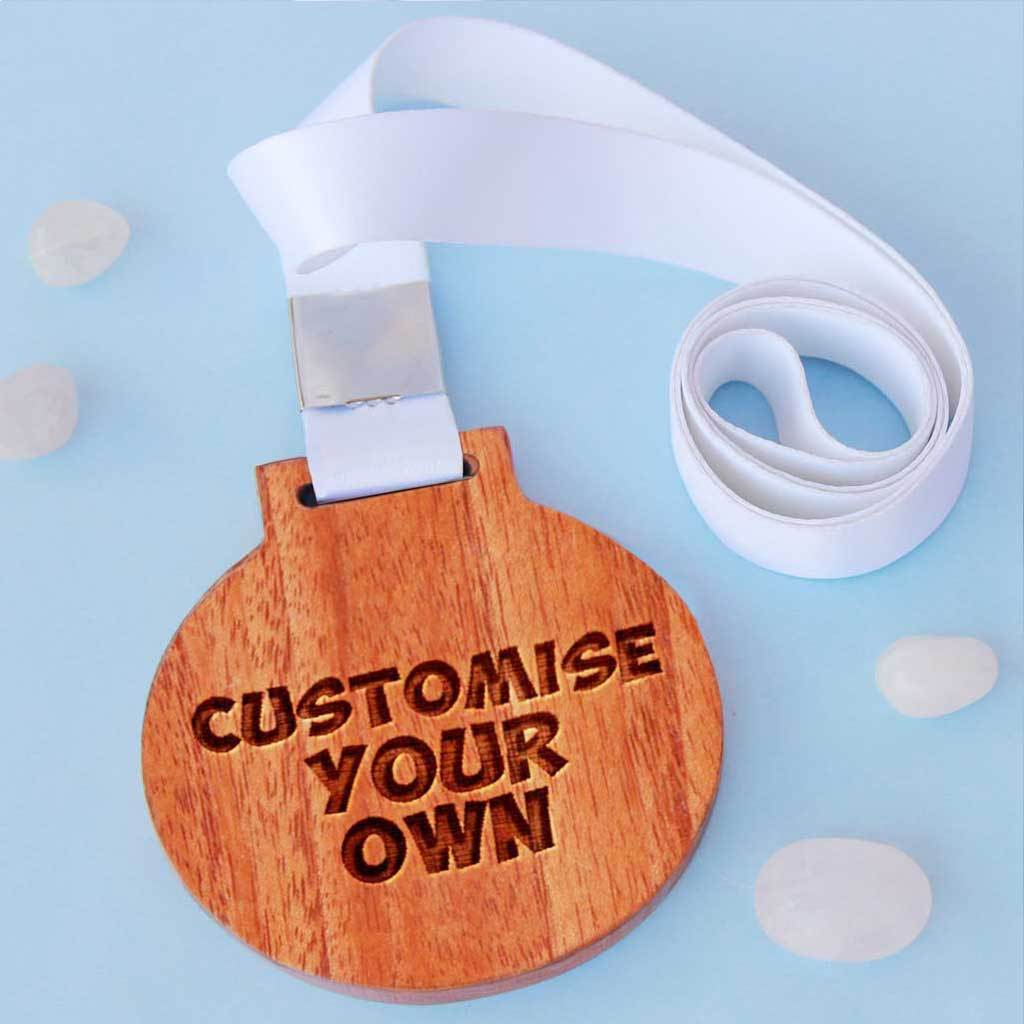
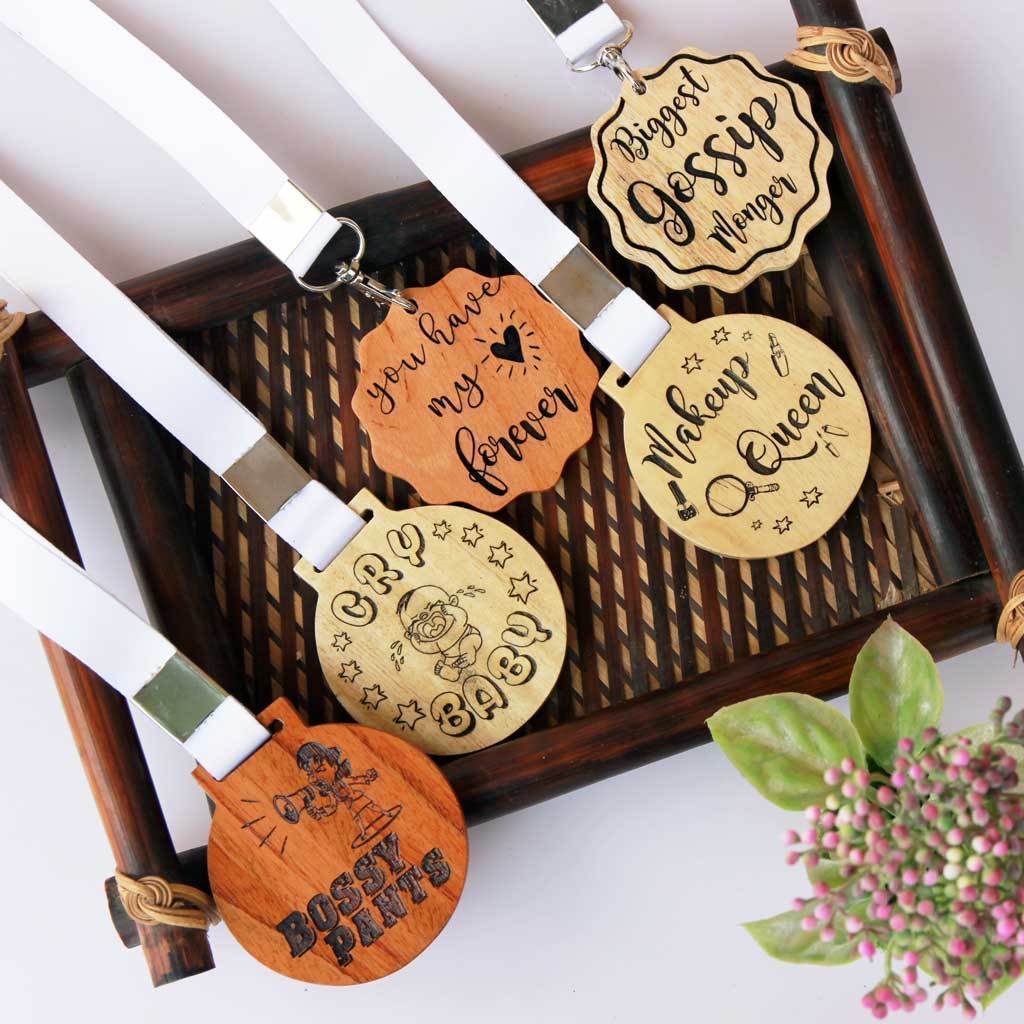
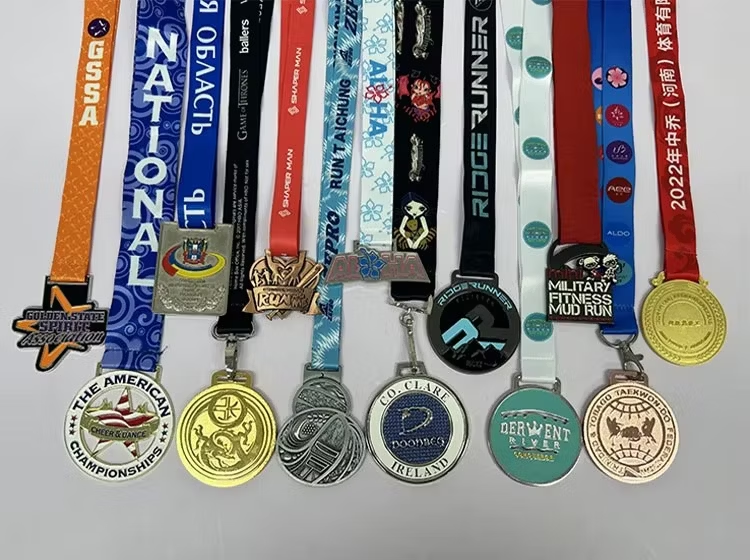
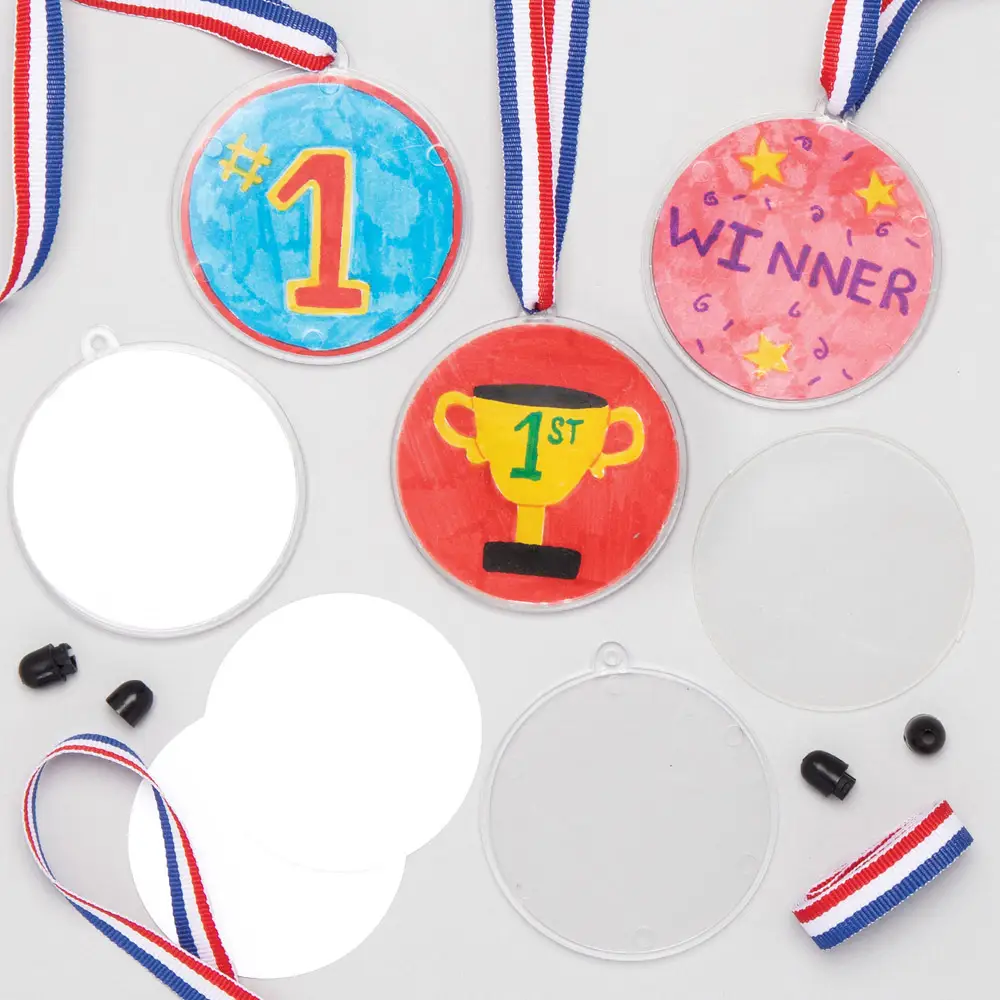
They should also decide medal type (die-cast, stamped, acrylic, wooden), finishes (antique gold, bright silver, matte, enamel fills), and ribbon requirements (width, colour, printed text). If they have a logo, they should request vector files for clean engraving or moulding.
Where can they buy custom medals online with predictable turnaround?
They can buy online from dedicated medal manufacturers and large award retailers that publish clear options, templates, and production timelines. This route works best when they want straightforward ordering, tracked delivery, and a broad range of styles.
They should look for suppliers that show real product photos, offer digital proofs, and state lead times for both production and shipping. If the event date is fixed, they should choose a seller that offers rush production or guaranteed dispatch rather than “estimated” timelines.
Which suppliers are best for high-quality, fully bespoke medals?
For fully bespoke medals, they should choose a specialist manufacturer that creates custom tooling and produces die-cast or stamped medals at scale. This is the best fit when they want unusual shapes, cut-outs, 3D relief, dual plating, or multi-colour enamel.
They should confirm whether the supplier handles design in-house, provides a mould fee quote upfront, and shares a clear proofing process. It also helps if the supplier can match Pantone colours, advise on line thickness for legibility, and suggest finishes that suit the artwork.
When does a local trophy shop make more sense than a factory?
A local trophy shop makes sense when they need a small run, fast collection, or simple customisation like engraving names and dates. It is also useful when the organiser wants to see samples in person and get hands-on advice.
The trade-off is that options may be narrower and per-unit pricing higher for complex custom shapes. Many trophy shops outsource bespoke medals anyway, so they should ask whether medals are made in-house or sourced, and what that means for lead time and proof revisions.
Are marketplaces and print-on-demand sites a good idea for medals?
They can be, but only for low-risk orders with generous timelines. Marketplaces may offer attractive pricing and variety, yet quality control and consistency can vary between sellers.
If they buy via a marketplace, they should check recent reviews, ask for photos of similar finished orders, and confirm what happens if the product arrives late or does not match the proof. They should also clarify whether ribbons, individual bags, and boxes are included or priced separately.
How can they compare quotes without getting caught by hidden costs?
They should compare quotes by requesting an itemised breakdown for mould or setup fees, unit price, ribbon printing, packaging, and shipping. A low headline price often excludes essentials like back text, individual polybags, or a premium ribbon.
They should also ask how many proof revisions are included, whether changes after approval cost extra, and what the policy is for defects. For large events, they should confirm overage rules, because some suppliers ship a small percentage extra or charge for spares.
What lead times should they expect for custom medals?
They should expect longer lead times for fully bespoke die-cast medals than for engraved or stock-shape medals. As a rough guide, simple customisation can be quick, while new tooling and complex finishes take longer due to mould creation and sampling.
They should build in time for proof approval, production, shipping, and contingency for delays. If medals are for a fixed-date event, they should choose a supplier that commits in writing to dispatch dates, not just production estimates. See beginner guide to custom medal design.
What should they look for in a supplier proof and sample process?
They should expect a digital proof that shows front and back artwork, dimensions, finish notes, and ribbon details. The organiser should check spelling, dates, border thickness, and the clarity of small text, because those are common failure points.
If the order is large or the design is high-stakes, they should request a pre-production sample or at least a detailed render that matches the finish. They should also confirm the approval step that triggers production, because changes after approval are often chargeable.
How can they ensure medals match their brand and event theme?
They can ensure brand consistency by providing vector logos, brand colours, and clear references for style. If they want a premium feel, they should consider textured backgrounds, layered enamel, or an antique finish that highlights relief.
They should also match ribbon design to the medal, because the ribbon is often more visible in photos than the medal face. A custom printed ribbon with the event name and year can make even a simple medal feel bespoke.
What is the safest short-list for most organisations?
For most organisations, the safest short-list is a specialist medal maker for bespoke designs, a reputable awards retailer for standard custom options, and a local trophy shop for small runs or urgent engraving. This mix covers quality, speed, and budget without forcing a single route.
If they are unsure, they should start by requesting two quotes: one from a specialist manufacturer and one from an established awards retailer. The difference in tooling, lead time, and finish options usually makes the best choice obvious.
FAQs (Frequently Asked Questions)
What key factors should organisers decide before choosing a custom medal supplier?
Organisers should first lock in the purpose, budget, and deadline as these determine what is realistic. They also need to decide on medal type (such as die-cast, stamped, acrylic, or wooden), finishes (like antique gold, bright silver, matte, enamel fills), ribbon style including width, colour, and printed text. Providing vector logo files is essential for clean engraving or moulding.
Where can organisers buy custom medals online with predictable turnaround times?
Organisers can purchase custom medals online from dedicated medal manufacturers and large award retailers that offer clear options, templates, and production timelines. They should look for suppliers displaying real product photos, providing digital proofs, stating lead times for production and shipping, and offering rush production or guaranteed dispatch for fixed event dates.
Which suppliers are best suited for high-quality, fully bespoke custom medals?
Specialist manufacturers who create custom tooling and produce die-cast or stamped medals at scale are ideal for fully bespoke designs. These suppliers can accommodate unusual shapes, cut-outs, 3D reliefs, dual plating, or multi-colour enamel. It’s important to confirm if they handle design in-house, provide upfront mould fee quotes, have a clear proofing process, and can match Pantone colours while advising on design legibility and finishes.
When is it more sensible to use a local trophy shop instead of a factory for custom medals?
A local trophy shop is preferable for small runs requiring fast collection or simple customisation like engraving names and dates. It allows organisers to see samples in person and receive hands-on advice. However, options may be limited and per-unit costs higher for complex shapes. Organisers should inquire whether medals are made in-house or outsourced to understand lead times and proof revision policies.
Are online marketplaces and print-on-demand sites reliable options for ordering custom medals?
Marketplaces can be suitable only for low-risk orders with generous timelines due to variable quality control between sellers. Organisers should check recent reviews, request photos of similar finished products, clarify policies on late deliveries or mismatches with proofs, and confirm whether ribbons, individual bags, and boxes are included or extra.
How can organisers effectively compare quotes from different custom medal suppliers without hidden costs?
Organisers should request an itemised breakdown including mould/setup fees, unit price, ribbon printing, packaging, and shipping. They must clarify how many proof revisions are included and whether changes after approval incur extra charges. It’s also important to ask about defect policies and overage rules since some suppliers ship extra units or charge for spares.
This guide walks through the essential decisions in a sensible order, so they do not overspend or get stuck in back-and-forth revisions.
What should the medal be for, and who is it for?
When you design your own medals, they should define the event and the audience before any design work starts. A school sports day medal needs different materials and messaging than a corporate award or a martial arts grading.
They should write down the event name, date, distance or category, and how winners are decided. If the medal must work across multiple categories, they should plan where variable text will go, such as on the back or on a small add-on plate.
What size and shape should a beginner choose?
A safe starting point is a round medal between 50 mm and 70 mm. That size looks substantial, photographs well, and leaves room for legible text.
If they want a more distinctive look, they can choose a shield, star, hexagon, or bespoke outline, but complex shapes can raise tooling costs. For a first project, they should keep the silhouette clean and use detail inside the border rather than making the outside edge too intricate.
Which material and finish looks best for the budget?
Most custom medals are zinc alloy, iron, brass, or stainless steel, each with different costs and detail levels. Zinc alloy is common because it holds fine detail and works well with plating and enamel.
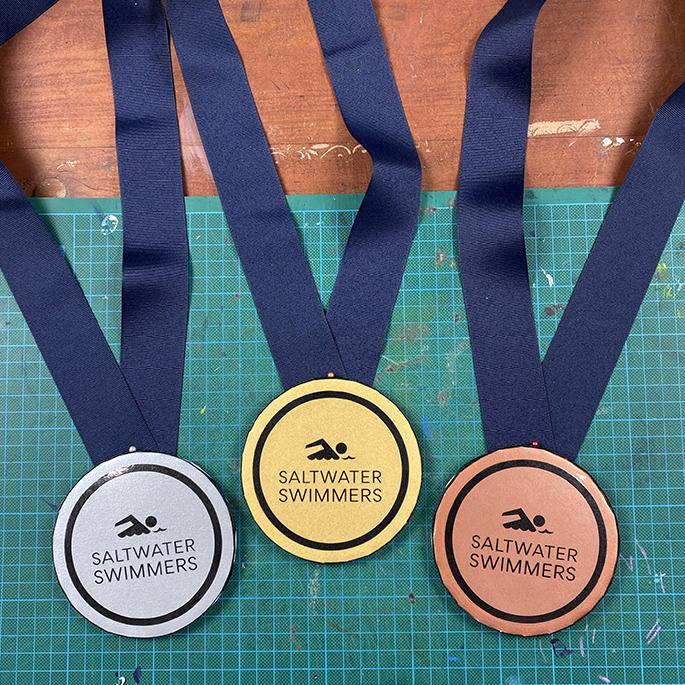
They should pick a finish that matches the meaning: gold for first place, silver for second, bronze for third is classic, but black nickel or antique finishes can look premium for themed events. If they want a vintage look that hides fingerprints and minor scuffs, antique gold or antique silver is often a good choice.
Should they use enamel colours or keep it metal-only?
Enamel adds colour and clarity, especially for logos, flags, and strong event branding. Soft enamel creates recessed colour areas with a textured feel, while hard enamel sits flush and feels smoother, usually at a higher cost.
If they want to keep it simple and cheaper, they can go metal-only with raised and recessed areas, using polished and matte contrasts. A good beginner approach is one or two enamel colours for emphasis, with the rest of the design in metal relief.
What needs to be on the front of the medal?
The front should communicate the award in one glance. They should prioritise the event name or logo, the sport or theme icon, and a clear symbol of achievement such as a laurel wreath, trophy, or ranking number.
They should avoid cramming in too much text. If the medal will be seen at arm’s length, large shapes and short wording read better than small paragraphs. If they must include a sponsor, a discreet logo placement usually works better than a long company name.
What should go on the back, and should it be personalised?
The back is the best place for details that vary. They can include the date, location, distance, category, finisher text, or an individual name and time if the supplier offers engraving or printing.
If personalisation is important, they should decide early whether it will be engraved, laser marked, or printed. They should also ask how data is supplied, such as a spreadsheet, and whether there is a per-item fee. A popular compromise is a blank panel on the back so they can add names later if needed.
How do ribbon choices change the overall look?
The ribbon often makes the first impression because it is visible when worn. They should choose ribbon width that suits the medal size, commonly 20 mm to 38 mm, and a length that sits comfortably on the chest.
They can pick a solid colour, a stripe pattern that matches team colours, or a custom printed ribbon with event text. If they want a cohesive look, they should match ribbon colours to enamel colours or the event branding, and avoid mixing too many shades.
How can they make the design look professional without being a designer?
They should start with a simple layout: a border, a central icon or logo, and supporting text on a clean curve. Strong medals tend to have one focal point rather than several competing elements.
They should use no more than two fonts, and ideally stick to one. Text should be large enough to read, with generous spacing, and they should avoid thin lines that may disappear in production. If they are using a logo, they should supply a clean vector file so edges do not look fuzzy.
What file formats and artwork prep do suppliers usually require?
Most suppliers prefer vector files such as AI, EPS, or SVG. These scale cleanly and make it easier to create moulds, clean edges, and accurate enamel boundaries.
If they only have a PNG or JPG, they should ask whether the supplier can redraw it and what that costs. They should also confirm the proof process, including how many revisions are included, and request a mock-up that shows the front, back, and ribbon together. See where to buy personalised event medals.
How many medals should they order, and how does quantity affect price?
Unit price typically drops as quantity rises because mould and setup costs are spread across more pieces. They should estimate attendance, add a sensible buffer for late entries or replacements, and then check price breaks at common quantities.
If they are ordering podium sets, they should confirm how the supplier differentiates them, such as different plating, different centre discs, or printed numbers. They should also ask about minimum order quantities, since some custom medal runs start at 50 or 100 units.
What production timeline should they plan for?
They should assume custom medals take longer than they expect, especially around peak seasons. Design approval, sampling, production, quality checks, and shipping all add time.
A practical approach is to start the process at least six to eight weeks before the event, and earlier if they want custom ribbons, complex shapes, or personalisation. They should also ask whether there are rush options and what they cost, and they should keep final artwork changes to a minimum once production starts.
What common mistakes should beginners avoid?
The most common mistake is trying to fit too much onto one medal. Too many words, tiny icons, or overly complex borders can make the finished piece look busy and harder to manufacture cleanly.
They should also avoid low-resolution logos, weak contrast choices, and rushing approval without checking spelling, dates, and sponsor names. If the medal includes enamel, they should confirm colour references, and if it includes plating, they should confirm whether it is shiny, matte, or antique.
How can they check quality before committing to a full run?
They should ask for a pre-production proof and, if possible, a physical sample. A good check is to view the design at the real size on screen or printed on paper, because readability changes when scaled down.
They should confirm the thickness, edge finish, attachment style, and ribbon stitching quality. They should also ask how defects are handled, what the replacement policy is, and whether the supplier has quality control photos before shipping.
What is the simplest step-by-step process to design and order?
They can follow a straightforward sequence and keep decisions moving. This reduces delays and makes supplier communication easier.
Decide on purpose, audience, and what must be included.
Pick size, shape, material, finish, and whether to use enamel.
Draft front and back content, keeping the front clean.
Choose ribbon type, width, and colours or printing.
Send vector artwork or request a redraw from the supplier.
Review and approve the proof carefully, especially text.
Confirm quantity, personalisation method, and delivery timeline.
Approve production and keep a buffer for shipping and spares.
FAQs (Frequently Asked Questions)
What is the first step in designing a custom medal?
The first step is to define the purpose of the medal and identify the target audience. This includes specifying the event name, date, category, and how winners will be decided to ensure the design aligns with the occasion.
What size and shape are recommended for beginners designing medals?
A round medal between 50 mm and 70 mm is a safe and effective starting point. This size offers a substantial look, good photo appeal, and enough space for legible text. Beginners should opt for clean silhouettes rather than intricate edges to keep tooling costs reasonable.
Which materials and finishes are best suited for custom medals within a budget?
Common materials include zinc alloy, iron, brass, and stainless steel. Zinc alloy is popular due to its ability to hold fine detail and compatibility with plating and enamel. Classic finishes like gold, silver, and bronze correspond to first, second, and third places respectively, while antique finishes offer a premium vintage appearance that hides fingerprints and scuffs.
Should enamel colours be used on medals or is metal-only better?
Enamel adds colour and clarity, especially for logos or branding. Soft enamel creates textured recessed areas while hard enamel provides a smooth flush surface but at higher cost. For simplicity and affordability, metal-only designs with polished and matte contrasts work well. Beginners often choose one or two enamel colours for emphasis combined with metal relief.
What information should be featured on the front of a custom medal?
The front should clearly communicate the award at a glance by prioritising the event name or logo, an icon representing the sport or theme, and a symbol of achievement such as a laurel wreath or ranking number. Avoid overcrowding with too much text; large shapes and concise wording improve readability from arm’s length.
How should personalisation be handled on the back of medals?
The back is ideal for variable details like dates, locations, categories, or individual names if engraving or printing services are available. Decide early on whether personalisation will be engraved, laser marked, or printed, understand how data should be supplied (e.g., spreadsheets), and inquire about any per-item fees. Alternatively, leaving a blank panel allows adding names later if needed.
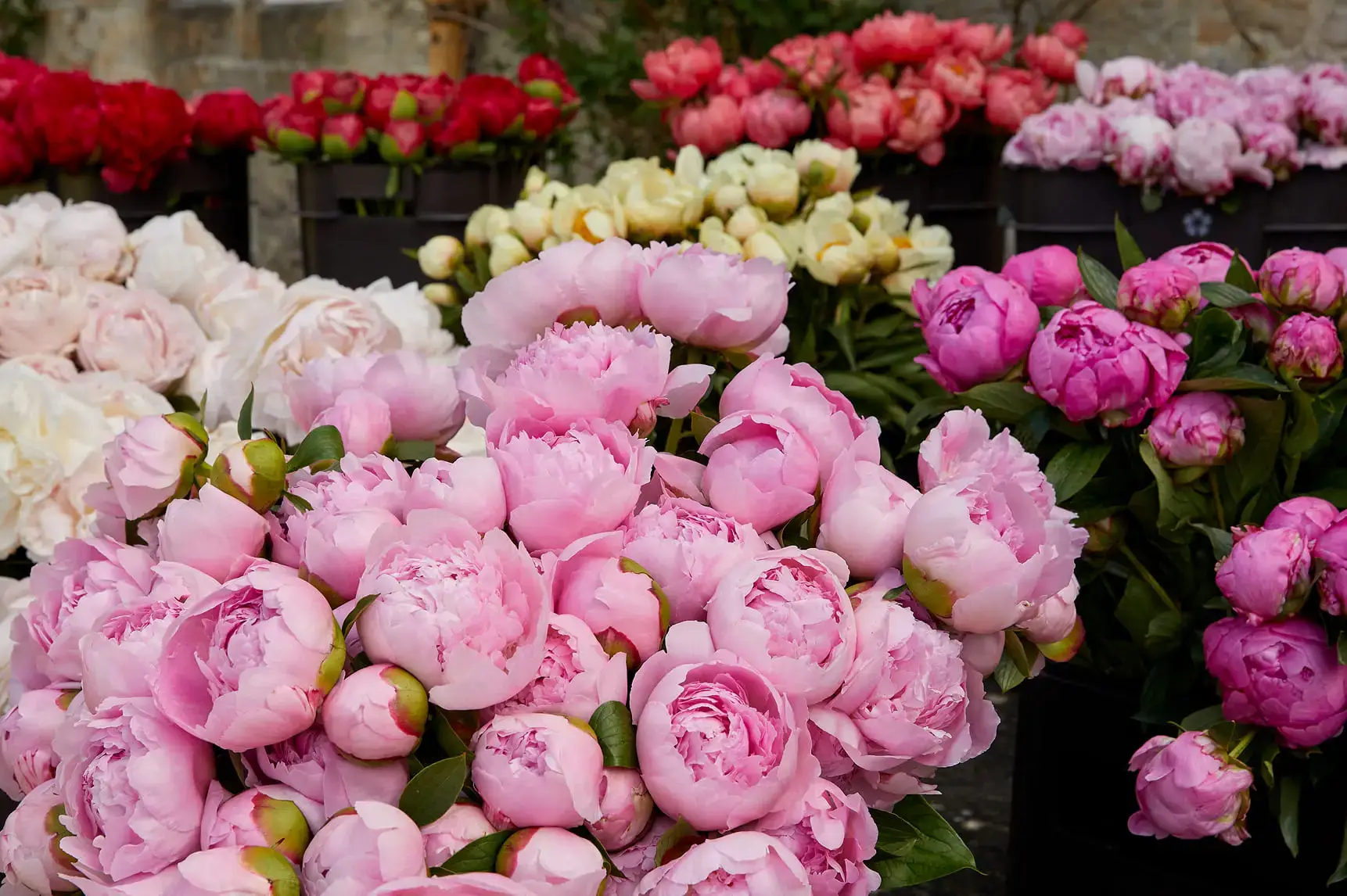
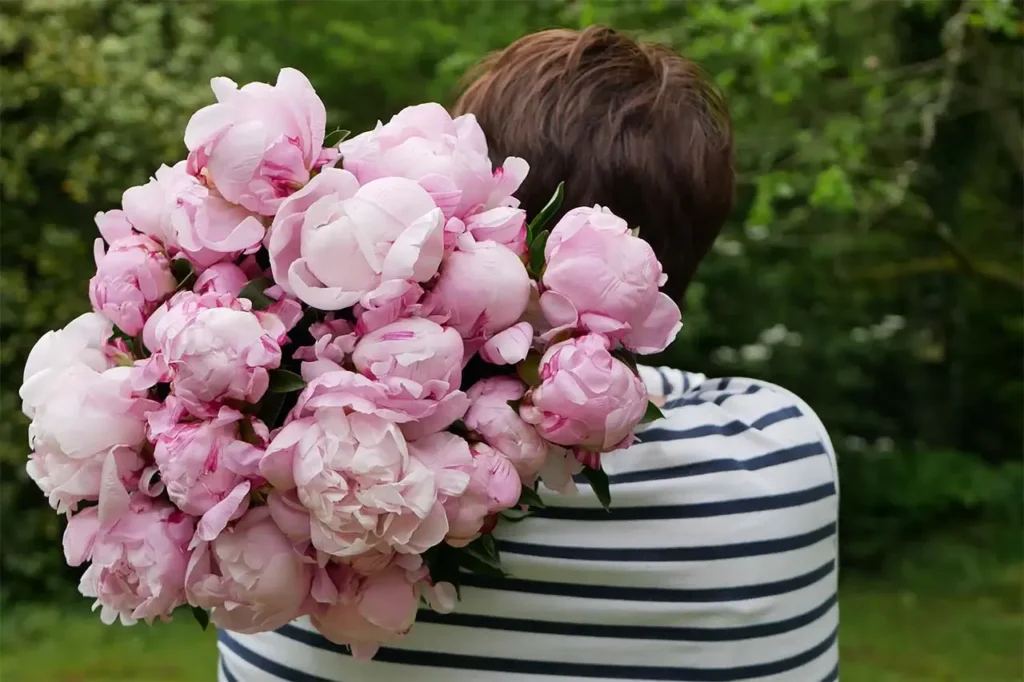
Peonies look like they were designed for modern interiors. Their soft layers, big silhouettes, and seasonal “luxury” feel can lift a space without needing much else. In Sydney homes, they also play nicely with light timber, stone, microcement, and airy, open-plan layouts. Here are ten modern, practical styling ideas that keep peonies feeling fresh, not fussy.
How can they make a minimalist entryway feel instantly elevated?
They can place a tight bunch of peonies in a single sculptural vase on a console to create a calm, high-impact welcome. Keep the stems short, the palette limited, and the surface clear.
A rounded ceramic, smoked glass, or ribbed stoneware vase suits modern Sydney entryways. One variety of peony, one tone, and plenty of negative space does the heavy lifting.
How can they style peonies for open-plan living without visual clutter?
They can repeat peonies in small moments instead of one oversized arrangement. Use two to three smaller vases across a long bench or kitchen island, each with a few stems.
This “broken-up” approach feels modern and intentional. It also lets peonies sit alongside everyday items like cookbooks, a bowl of citrus, or a timber tray without looking crowded.
How can they pair peonies with contemporary vases for a designer look?
They can choose a vase with a bold shape and keep the flowers simple. Peonies already bring volume, so the vase should add structure, not more drama.
Good pairings include cylinders, asymmetrical vessels, or matte, architectural forms. A single-colour arrangement in a strong silhouette often looks more expensive than a mixed bouquet.
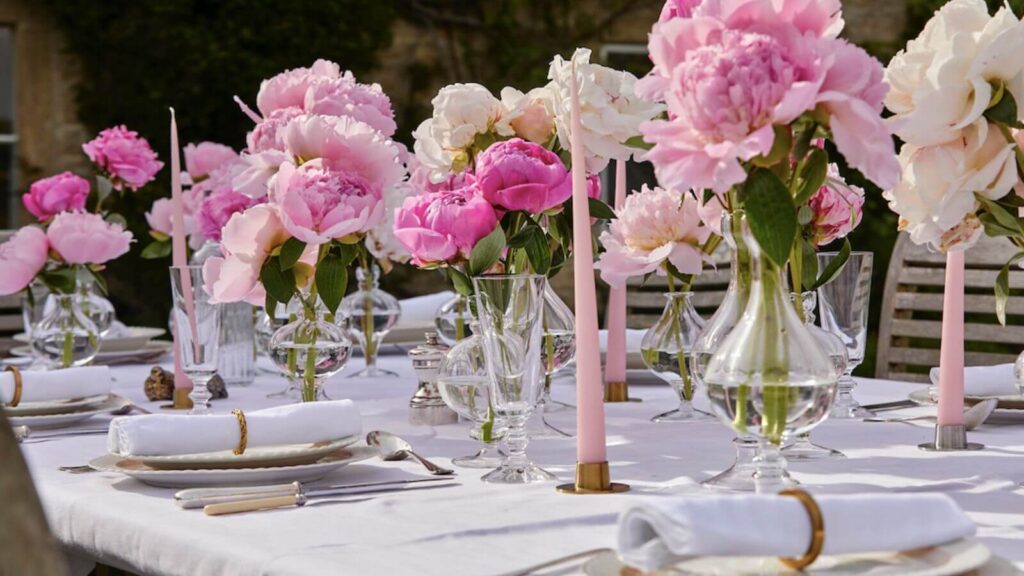
How can they use peonies as a dining table centrepiece without blocking conversation?
They can go low and wide, keeping stems short and the profile under eye level. Peonies naturally sit well in shallow bowls or low-footed vessels.
To modernise the look, they can avoid extra filler and let the blooms be the feature. If greenery is needed, a few clean lines like magnolia leaf or olive can keep it crisp.
How can they style peonies in the kitchen without making it feel precious?
They can treat peonies like an everyday upgrade rather than a “special occasion” display. A small bunch beside the sink or near the coffee setup adds warmth to hard surfaces.
How can they make peonies work in a modern bathroom?
They can use one or two stems in a slim vessel to add softness against tile and stone. The key is restraint and placement: a vanity corner, a bath ledge, or a shelf.
Bathrooms are humid, so they should refresh water often and keep leaves out of the waterline. A single bloom can feel spa-like without competing with clean finishes.
How can they style peonies with native foliage for a Sydney twist?
They can balance peonies with structured Australian foliage to stop the look feeling overly romantic. Think gum, banksia leaf, or leucadendron-style shapes for contrast.
This mix suits modern coastal and contemporary homes. The peonies provide softness, while the foliage adds a sharper outline that reads more “Sydney” than traditional bouquet styling.
How can they create a monochrome peony moment that feels modern?
They can commit to one colour family and vary only the tone. For example, white peonies with cream buds, or pink peonies from blush to coral.
Monochrome arrangements look clean in modern interiors because they behave like a design element, not decoration. A single colour also photographs beautifully in bright Sydney light.
How can they use peonies to soften sharp architectural lines?
They can place peonies where the home feels most angular, like near a concrete wall, steel-framed glazing, or a sharp-edged stone bench. The contrast is the point.
A large bloom against hard geometry makes the space feel lived-in and human. Keeping the arrangement simple ensures the architecture still leads, with peonies as the soft counterweight.
How can they extend the life of peonies so the styling lasts longer?
They can start with clean tools, a clean vase, and fresh water, then trim stems on an angle. Leaves below the waterline should be removed to keep water clearer.
They can also move the vase away from direct sun and heat, which matters in warmer Sydney rooms. If buds arrive tight, a gentle unwrap and warmish water can help them open.
Peonies do not need complicated styling to look premium. When they keep shapes clean, colours intentional, and placement practical, peonies can feel perfectly at home in modern Sydney interiors.
FAQs (Frequently Asked Questions)
How can peonies elevate a minimalist entryway in modern Sydney homes?
Peonies can instantly elevate a minimalist entryway by placing a tight bunch in a single sculptural vase on a console. Keeping stems short, the colour palette limited, and the surface clear creates a calm, high-impact welcome that complements modern Sydney interiors.
What is the best way to style peonies in open-plan living spaces without causing visual clutter?
To avoid visual clutter in open-plan living areas, repeat peonies in small moments using two to three smaller vases across surfaces like benches or kitchen islands. This broken-up approach feels modern and intentional, allowing peonies to sit alongside everyday items without looking crowded.
Which types of contemporary vases pair well with peonies for a designer look?
Contemporary vases with bold shapes such as cylinders, asymmetrical vessels, or matte architectural forms pair beautifully with peonies. Choosing a single-colour arrangement in a strong silhouette adds structure without overwhelming the natural volume of the flowers, achieving an expensive and modern aesthetic.
How can peonies be styled as dining table centrepieces without obstructing conversation?
For dining table centrepieces, use low and wide arrangements with short stems keeping the profile under eye level. Peonies work well in shallow bowls or low-footed vessels. Avoid extra filler and let the blooms stand out; if greenery is needed, opt for clean lines like magnolia leaf or olive to maintain a crisp look.
What tips help incorporate peonies into kitchen decor without making the space feel too precious?
Treat peonies as an everyday upgrade by placing small bunches beside sinks or near coffee setups to add warmth to hard surfaces. Match flower colours to the kitchen palette—for example, blush with pale stone or deep pink with darker joinery—and use simple, washable glass vases for practicality.
How can peonies be styled effectively in modern bathrooms?
Use one or two stems of peonies in slim vessels placed thoughtfully on vanity corners, bath ledges, or shelves to add softness against tile and stone. Maintain restraint and refresh water often due to humidity. A single bloom creates a spa-like atmosphere without competing with clean bathroom finishes.
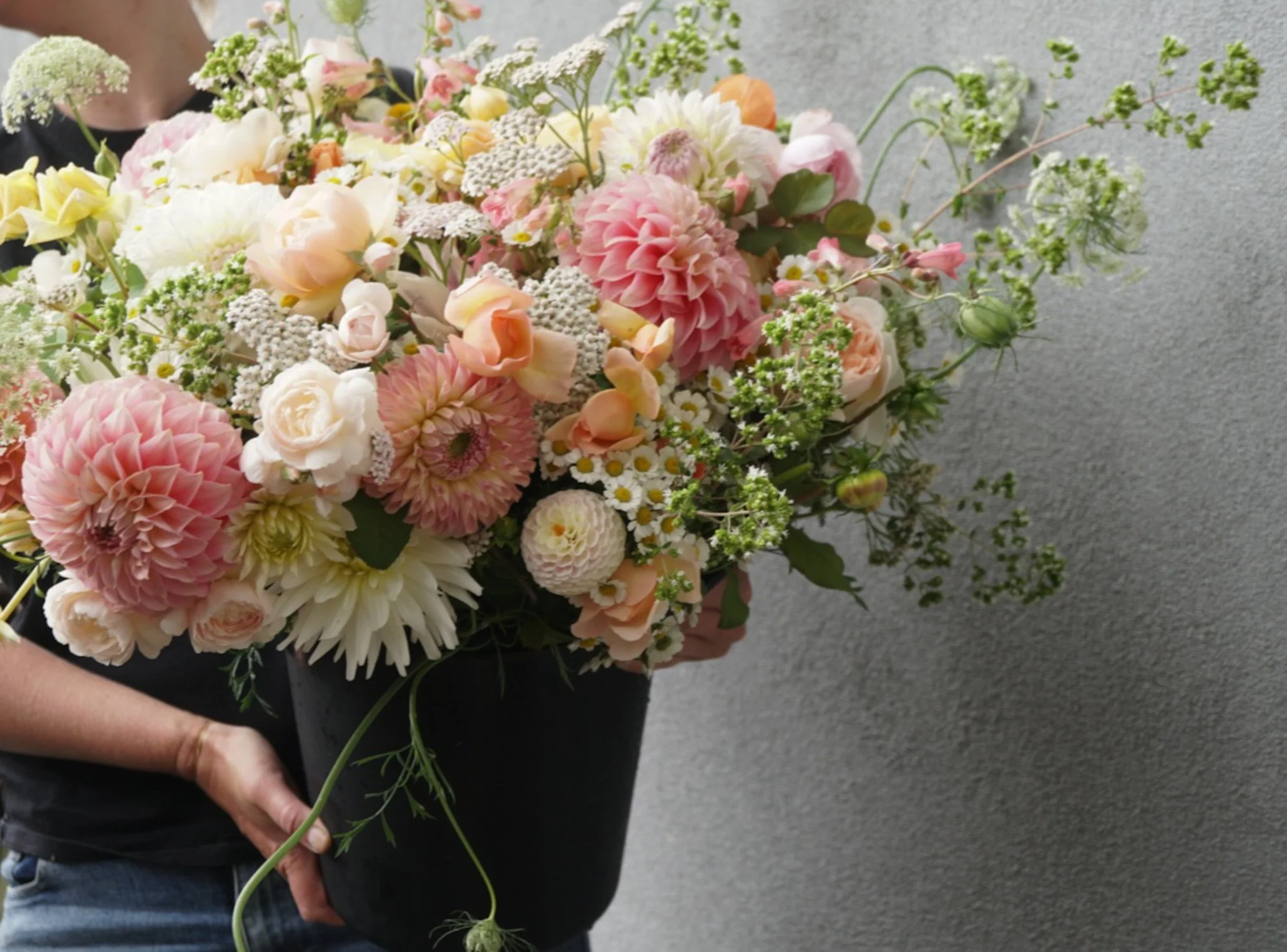
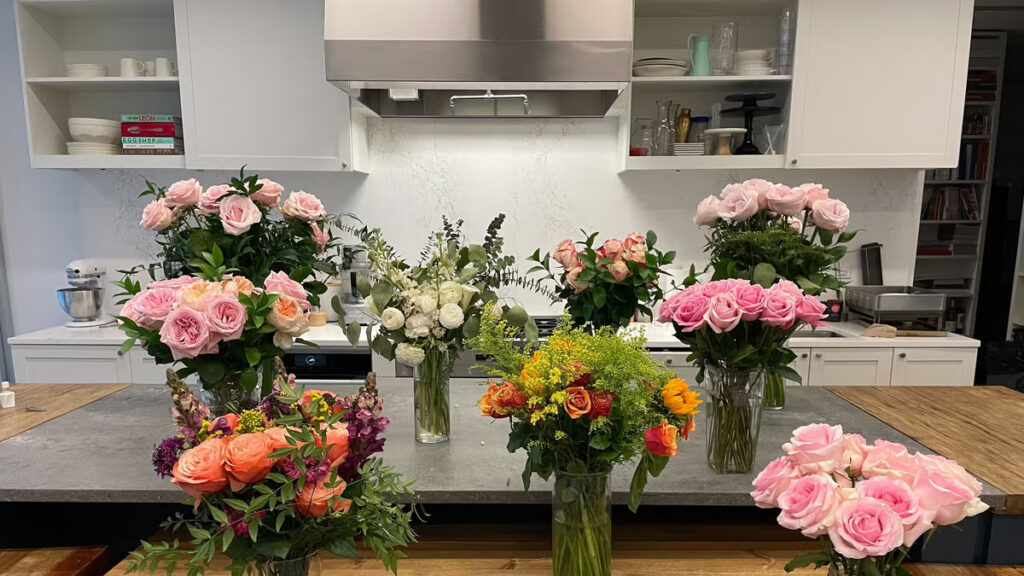
Choosing flowers in Willoughby is less about rules and more about reading the moment. The best picks match the suburb’s relaxed, leafy feel, suit the recipient’s lifestyle, and still look fresh after a few days on the bench.
This guide walks through what locals tend to love, what to buy for common occasions, and how to get better value from every stem.
What makes a bouquet feel “right” for Willoughby?
It usually comes down to effortless, natural-looking flowers Willoughby that suit a calm home and a busy schedule. Willoughby residents often prefer arrangements that look full without being fussy, with colours that feel clean and modern.
Soft whites and greens, warm neutrals, gentle pinks, and seasonal natives tend to blend nicely with local interiors. A loose, garden-style bouquet also feels more “local” than a tightly packed, formal dome.
Which seasonal flowers are the safest bet year-round?
Seasonal flowers are the easiest way to get better freshness and better impact for the same budget. When flowers are in season, they tend to open beautifully, last longer, and look more abundant.
In practice, that means choosing what’s plentiful right now rather than chasing a specific bloom. If they want a similar look, they can ask for “that style” in seasonal options, such as soft pastels, bright and cheerful, or native and textural. You may also like to learn more about why same-day flower delivery in Sydney is growing in demand,
What colours do Willoughby residents typically prefer?
Many locals lean towards colours that feel calm, bright, and not too loud. Neutrals and greens feel timeless, while blush, peach, and soft lavender read as thoughtful without being overly romantic.
For something more vibrant, sunny yellows and crisp whites can feel energetic and clean. Deep reds can be perfect for romance, but they can also feel intense, so they work best when the occasion clearly calls for it.
How should they choose flowers for birthdays in Willoughby?
For birthdays, they should aim for cheerful, easy-to-live-with flowers that suit different homes and tastes. The best birthday bouquets usually have a clear colour theme and a mix of open blooms plus a few buds that will open over time.
If they are unsure, they can choose bright but not neon, such as soft pinks, peaches, whites, and a touch of yellow. Adding foliage gives it a fuller, more generous look without pushing up the cost too much.
What should they buy for new babies and congratulations?
For new babies, lighter scents and softer colours are a safer choice. Many families prefer gentle pastels, whites, and fresh greens that feel calm and clean.
They should also consider practicality. A compact arrangement or posy is often easier than a huge bouquet when space is limited. If they want the gift to feel extra useful, pairing flowers with a vase-ready style can help, since the recipient may not want to hunt for a suitable vase.
Which flowers work best for sympathy and “thinking of you”?
Sympathy flowers should feel respectful, soothing, and not overly flashy. Whites, creams, soft pinks, and greens are common because they communicate care without demanding attention.
They can choose simple, elegant flowers with clean lines, and avoid overpowering fragrance. A tasteful arrangement with plenty of foliage and a quiet colour palette usually lands well, especially when they do not know the recipient’s preferences.
How can they choose something romantic without being cliché?
A romantic bouquet does not have to mean a dozen red roses. Many Willoughby residents prefer romance that feels personal and modern, like soft pinks, whites, and warm neutrals with lush greenery.
They can also choose textural blooms and a slightly wilder, garden style. It looks more considered and less like a default purchase. If they want to include roses, mixing them with complementary flowers can keep the look fresh and less predictable.
What low-maintenance flowers suit busy households?
For busy households, longevity matters as much as looks. They should look for flowers that handle warmth, light changes, and a couple of missed water changes better than delicate blooms.
Hardier stems, structured flowers, and native varieties often last well. A bouquet with a mix of sturdy focal flowers and supportive foliage tends to hold its shape for longer, which keeps it looking presentable even after a few days.
How do they make flowers last longer at home?
A few small habits usually add days to a bouquet. They should start by trimming stems on an angle and using a clean vase, since bacteria is what shortens vase life fastest.
They can change the water every couple of days, remove any leaves sitting below the waterline, and keep flowers away from direct sun and fruit bowls. If a stem starts to collapse, removing it early can help the rest of the arrangement stay fresh.
What should they check before buying flowers locally?
They should judge freshness with their eyes and hands, not just the label. Petals should look hydrated, not papery, and stems should feel firm rather than slimy.
They can also look for a mix of open flowers and buds. Fully open blooms can look impressive on day one, but they may fade quickly. A bouquet that is still opening usually gives a better multi-day display.
How can they stay on budget without the bouquet looking cheap?
They should focus on shape, foliage, and a clear colour story. A smaller number of standout flowers can look premium when balanced with quality greenery and a few textural fillers.
Choosing seasonal stems is the easiest cost saver. They can also ask for a “designer’s choice” within a budget, since it lets the florist use what is freshest and best value on the day.
What’s the simplest way to choose flowers Willoughby residents love?
They should choose seasonal flowers, keep colours calm or intentionally bright, and match the arrangement to the occasion and the recipient’s lifestyle. When in doubt, a loose, garden-style bouquet with plenty of greenery usually feels local, modern, and easy to enjoy.
If they want the safest result, they can share three details before ordering: the occasion, the preferred colour mood, and whether the recipient likes low-scent, low-maintenance flowers. That small guidance almost always leads to a bouquet that feels spot on.
FAQs (Frequently Asked Questions)
What kind of flowers best suit the relaxed and leafy vibe of Willoughby?
Flowers that feel effortless and natural-looking are ideal for Willoughby. Residents often prefer bouquets that look full without being fussy, featuring soft whites, greens, warm neutrals, gentle pinks, and seasonal natives. A loose, garden-style arrangement complements the calm home environment and busy lifestyle typical of the suburb.
Which seasonal flowers offer the best freshness and value throughout the year in Willoughby?
Choosing seasonal flowers is the smartest way to ensure freshness and get better value. Seasonal blooms open beautifully, last longer, and appear more abundant. Instead of chasing specific flowers out of season, opt for seasonal options that match your desired style—like soft pastels, bright cheerful tones, or native textural varieties—to maintain a fresh and impactful bouquet.
What colors do Willoughby residents typically prefer in their floral arrangements?
Willoughby locals tend to favor calm, bright colors that aren’t too loud. Timeless neutrals and greens are popular, along with blush, peach, and soft lavender shades that feel thoughtful yet understated. For a vibrant touch, sunny yellows and crisp whites add energy without overwhelming. Deep reds are reserved for clearly romantic occasions due to their intensity.
How should I choose flowers for birthdays in Willoughby to appeal to different tastes?
For birthdays, select cheerful yet easy-to-live-with flowers that suit various homes and preferences. Aim for bouquets with a clear color theme combining open blooms and some buds that will open over time. Soft pinks, peaches, whites, and touches of yellow work well when unsure. Adding foliage enhances fullness without significantly increasing cost.
What types of flowers are appropriate for new babies or congratulatory gifts in Willoughby?
Gentle pastels, whites, and fresh greens with lighter scents are preferred for new babies to create a calm and clean feel. Practicality matters too—a compact arrangement or posy is often better suited than a large bouquet when space is limited. Pairing flowers with a vase-ready style can also be thoughtful since recipients may not have a suitable vase on hand.
How can I make my floral gift feel romantic yet modern without being cliché in Willoughby?
Opt for romance that feels personal by choosing soft pinks, whites, warm neutrals, and lush greenery arranged in a slightly wild garden style. Including textural blooms adds interest while avoiding predictability. If you want roses included, mix them with complementary flowers to keep the bouquet fresh and less traditional than a dozen red roses.
What are Custom Sweatbands and How Can They Be Used in Sports and Corporate Events?
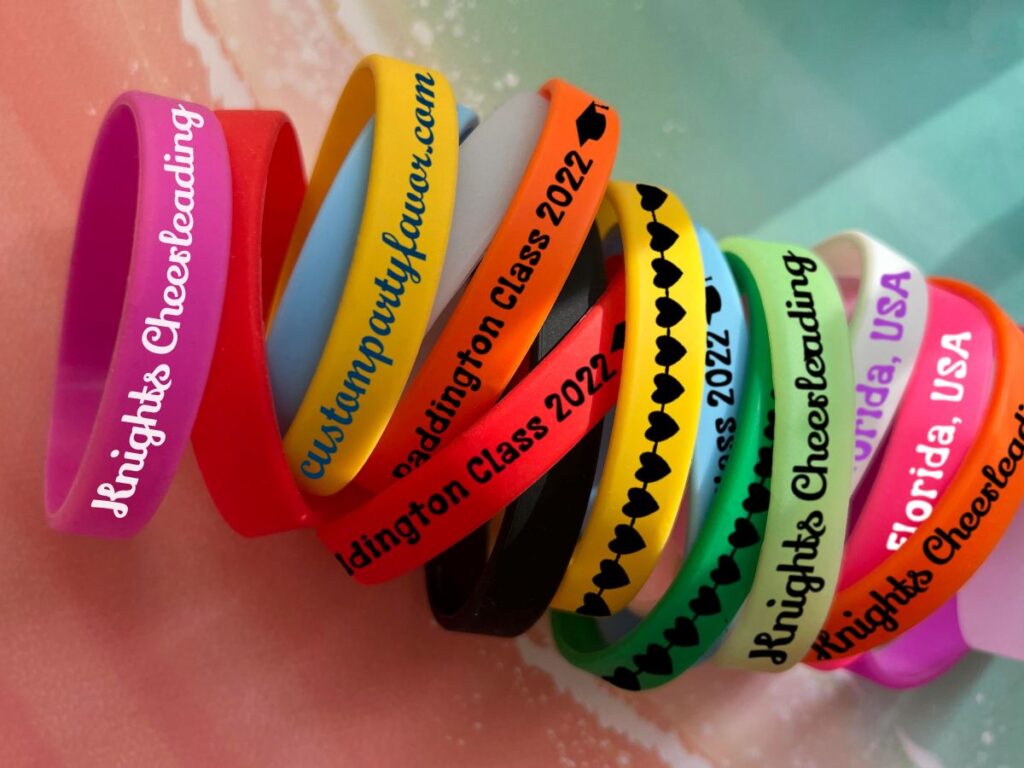
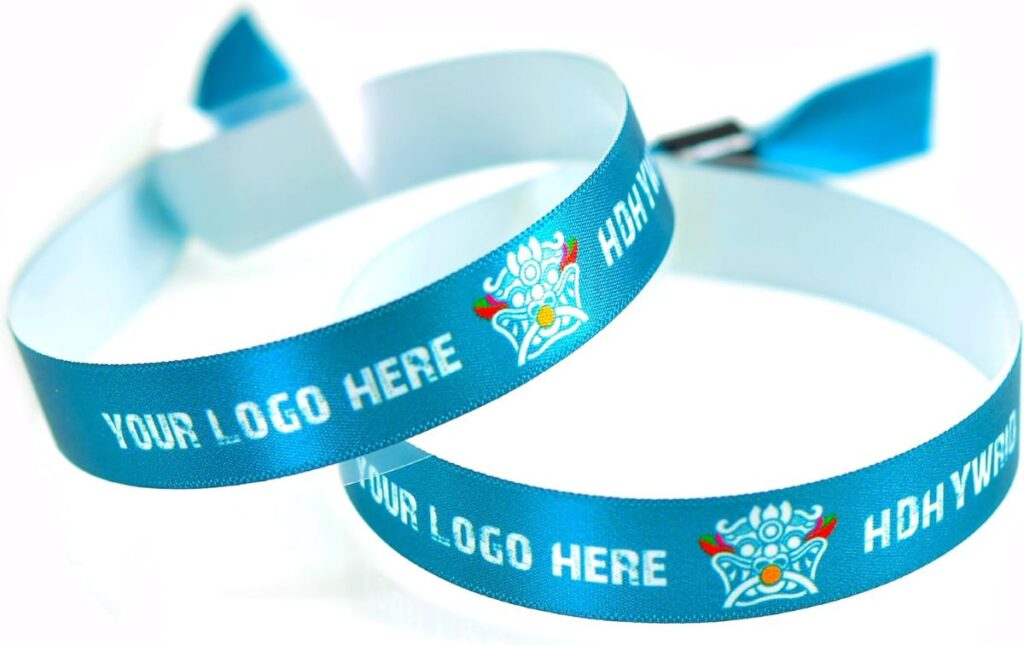
Custom sweatbands are personalised fabric bands worn around the wrist or head, designed with specific logos, colours, or messages to serve both functional and promotional purposes. These versatile accessories have evolved from simple athletic gear into powerful branding tools used across sports events and corporate gatherings.
The dual nature of custom sweatbands makes them uniquely valuable:
Practical functionality: Absorb perspiration, improve grip, and enhance comfort during physical activities
Marketing potential: Display brand logos, team colours, and promotional messages to wide audiences
Cost-effectiveness: Affordable to produce in bulk whilst maintaining high visibility impact
In sports settings, custom sweatbands Australia address immediate physical needs whilst simultaneously building team identity and brand recognition. Athletes rely on them to maintain performance levels, yet spectators and participants alike recognise them as symbols of team affiliation and event participation.
Corporate events leverage these same qualities differently. Companies transform sweatbands into walking advertisements, identification tools, and memorable keepsakes that extend brand reach beyond the event itself. The customisation options allow businesses to align sweatbands with corporate colours, event themes, or specific campaign messages.
The top 5 applications for custom sweatbands in sports and corporate events demonstrate their remarkable adaptability. From enhancing athletic performance to controlling event access, these simple accessories serve complex purposes that benefit organisers, participants, and brands simultaneously. Their lightweight, wearable nature ensures maximum exposure whilst providing genuine utility to users.
How Custom Sweatbands Enhance Athletic Performance in Sports
Custom sweatbands directly improve athletic performance by managing perspiration that would otherwise impair an athlete’s focus and physical execution. When sweat drips into eyes or onto hands, it creates immediate distractions that can affect split-second decisions and precise movements during competition.
Sweat Absorption Benefits for Athlete Comfort
The primary function of sweatbands is their ability to wick away moisture. During intense physical activity, the body produces significant amounts of perspiration, particularly around the forehead and wrists. Headbands intercept sweat before it reaches the eyes, eliminating the stinging sensation and blurred vision that forces athletes to break concentration. Wristbands serve as convenient wiping surfaces, allowing players to quickly clear their face without using clothing or towels.
Tennis players, basketball athletes, and runners rely heavily on this sweat absorption feature. A tennis player serving at match point cannot afford to have sweat dripping into their eyes, whilst a basketball player attempting a crucial free throw needs unobstructed vision. The continuous moisture management provided by sweatbands maintains consistent athlete comfort throughout extended periods of exertion.
Grip Enhancement During Physical Activities
Sweatbands worn on the wrists provide a secondary benefit that directly impacts grip performance. Athletes use wristbands to dry their palms before handling equipment, whether gripping a tennis racquet, basketball, or weightlifting bar. Moisture on hands reduces friction and control, leading to slips that compromise performance or cause dropped equipment.
The absorbent material of wristbands creates an accessible drying station that athletes can use repeatedly without interrupting play. Gymnasts wipe their hands on wristbands before mounting apparatus, whilst cricketers maintain dry palms for better bat control. This simple action of wiping hands on a wristband takes mere seconds but prevents the grip deterioration that accumulates from sweaty palms during competition.
Prevention of Sweat-Related Distractions and Injuries
Beyond comfort, sweatbands play a safety role in preventing injuries caused by moisture. Sweat on the forehead can drip onto playing surfaces, creating slippery patches that pose hazards for athletes making quick directional changes. Basketball courts and squash courts are particularly susceptible to this issue, where a sudden loss of traction can result in falls or collisions.
By absorbing excess sweat and keeping foreheads dry, sweatbands minimise the risk of such accidents during high-intensity sports activities. Athletes can move with confidence, knowing that their footing remains secure even in demanding situations.
In summary, custom sweatbands enhance athletic performance through effective perspiration management. By providing comfort via moisture-wicking properties, improving grip control through palm-drying capabilities, and ensuring safety by preventing slippery surfaces caused by sweat accumulation – these accessories play an integral role in optimising an athlete’s abilities on the field or court.
How Custom Sweatbands Promote Brands at Sports Tournaments
Custom sweatbands turn athletes into walking advertisements during sports tournaments, giving brands constant visibility throughout competitions. Every time a player wipes their forehead or raises their arm, the custom logo grabs the attention of spectators, cameras, and other competitors.
Affordable Sports Advertising That Delivers Results
Sweatbands are one of the most affordable sports advertising investments available to brands. Unlike expensive stadium banners or digital advertising slots, a single sweatband costs only a few pounds but generates hours of exposure. The return on investment becomes especially impressive when teams wear matching branded sweatbands throughout multi-day tournaments.
Key advantages include:
Low production costs compared to traditional advertising mediums
Repeated visibility as athletes wear them throughout entire events
Organic brand exposure captured in photographs and video footage
Extended reach when participants share tournament images on social media
Maximising Brand Visibility Through Strategic Design
The placement of custom logos on sweatbands ensures prime visibility on an athlete’s body. Wristbands sit at eye level during handshakes, high-fives, and victory celebrations. Headbands become focal points in close-up shots and team photographs.
Brands can choose between subtle embroidered logos for premium appeal or bold printed designs for maximum impact. The colour contrast between the sweatband material and logo determines visibility from a distance. Neon colours against dark bands create striking visual effects that cameras capture effortlessly.
Tournament organisers often coordinate sweatband colours with event branding, creating a cohesive visual identity. Sponsors benefit from association with professional presentation standards, elevating their brand perception among attendees.
Building Team Unity While Broadcasting Brand Identity
Custom sweatbands serve dual purposes by strengthening team cohesion while amplifying brand messages. When entire teams wear matching sweatbands featuring team colours and sponsor logos, they project a unified, professional image that resonates with audiences.
This synchronized appearance creates memorable visual moments during competitions. Spectators associate the brand with teamwork, dedication, and athletic excellence. The psychological impact extends beyond the tournament as participants often keep their sweatbands as mementoes, providing lasting brand recall.
Youth sports teams particularly benefit from this approach. Parents and supporters
Why Are Custom Sweatbands Effective Corporate Branding and Promotional Giveaways?
Custom sweatbands work exceptionally well as corporate branding tools because they combine practicality with continuous brand exposure. When attendees wear these items during and after events, they become walking advertisements for your company. Unlike traditional promotional items that end up in drawers, sweatbands serve a functional purpose that encourages repeated use.
Creating Lasting Impressions Through Memorable Keepsakes
Event attendees receive countless promotional items throughout the year, yet custom sweatbands stand out due to their unique blend of utility and wearability. These branded merchandise pieces remain in circulation long after conferences or corporate gatherings conclude. Participants often use them during gym sessions, outdoor activities, or casual sports, creating extended brand visibility beyond the initial event.
The tactile nature of sweatbands makes them more memorable than paper-based materials. When customised with event dates, company logos, or motivational messages, they transform into tangible reminders of positive experiences. Employees and clients who receive these items at product launches, team-building exercises, or annual meetings often keep them as mementoes of significant company milestones.
Strengthening Brand Identity Through Strategic Customisation
Corporate branding achieves maximum impact when every touchpoint reinforces consistent visual elements. Custom sweatbands offer multiple customisation options that align perfectly with brand guidelines:
Colour matching to exact corporate palette specifications
Logo placement in high-visibility positions
Typography selection that mirrors brand fonts
Slogan integration for campaign-specific messaging
Companies can create different designs for various departments, events, or initiatives whilst maintaining cohesive branding. A tech startup might opt for sleek, minimalist designs with their logo, whilst a fitness company could choose bold colours that reflect their energetic brand personality. This flexibility allows organisations to tailor promotional giveaways to specific audiences without diluting brand recognition.
The customisation process enables businesses to incorporate QR codes, social media handles, or website URLs directly onto the sweatbands. This integration bridges physical and digital marketing efforts, encouraging recipients to engage with online platforms.
Maximising Return on Investment with Cost-Effective Corporate Gifts
Budget constraints often limit promotional campaigns, yet custom sweatbands offer an affordable solution without compromising quality. Bulk orders typically reduce production costs per unit, making them an economical choice for businesses seeking large-scale giveaways.
By selecting practical items like sweatbands that align with target audience interests—such as fitness enthusiasts or active professionals—companies increase the likelihood of positive reception and usage. This strategic approach maximises return on investment by ensuring promotional products are not only distributed but also embraced by recipients.
In contrast to conventional advertising methods where costs accumulate regardless of reach (e.g., billboards or print ads), custom sweatbands provide tangible assets that continue promoting long after initial distribution. Each time someone wears a branded sweatband during workouts or leisure activities becomes another opportunity for organic exposure—an invaluable asset in building brand awareness over time.
How Can Custom Sweatbands Serve Identification and Access Control at Corporate Events?
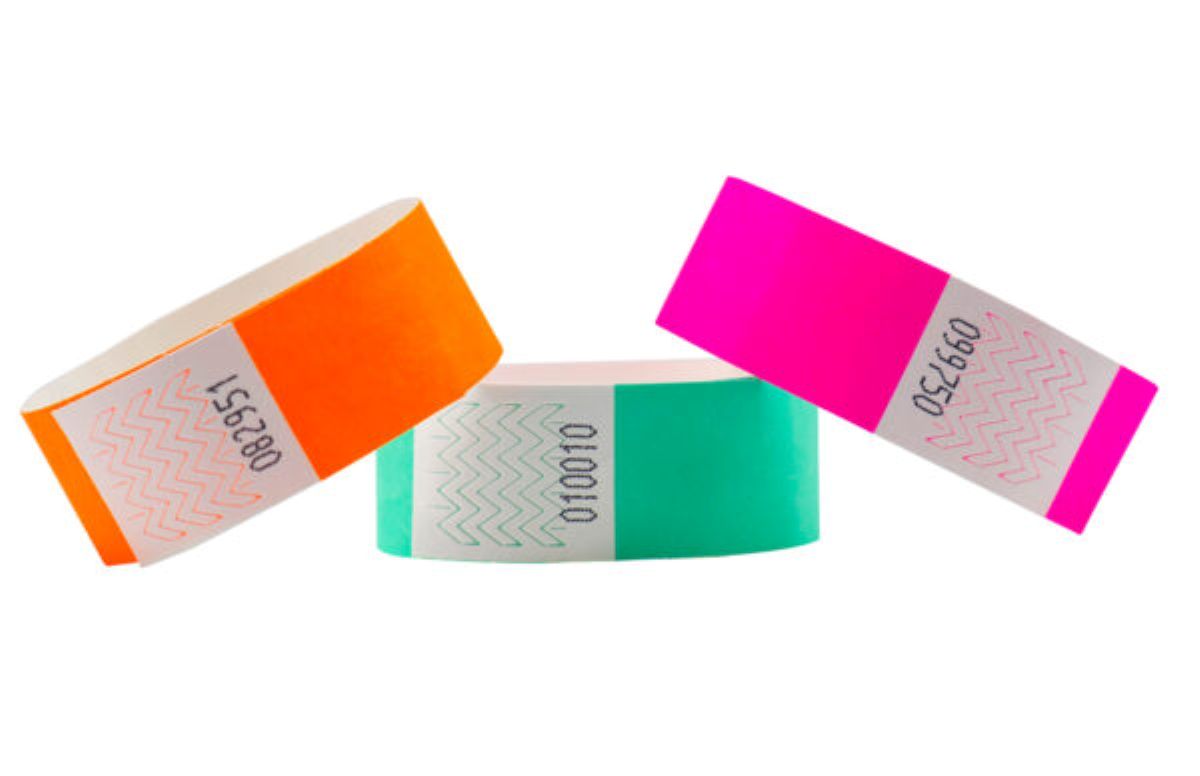
Custom sweatbands serve as practical identification bands at conferences, seminars, and large corporate events. Event organisers can use different colours for sweatbands to differentiate between various attendee groups—speakers, VIP guests, general attendees, staff members, or media personnel—allowing security teams to quickly identify authorised individuals.
The advantage of using sweatbands over traditional lanyards or badges lies in their wearable nature. Attendees involved in team-building activities, charity runs, or wellness events can comfortably wear sweatbands without the hassle of dangling credentials that may hinder their movement.
Customisation Options for Enhanced Security
Event management teams have the option to add specific security features directly onto the sweatbands. By printing unique QR codes, sequential numbering, or holographic elements onto the fabric, an additional layer of access control is created that is difficult to duplicate. These customisation choices enable organisers to keep track of attendance, monitor session participation, and prevent unauthorised entry into restricted areas.
Companies can include event-specific details such as:
Conference dates and venue information
Session access levels (keynote only, full access, exhibitor)
Dietary requirements for catering purposes
Emergency contact information
Company department or division identifiers
Streamlining Attendee Management
Sweatbands simplify the check-in process at corporate events by serving as visible proof of registration. Security personnel can verify credentials without requiring attendees to search through bags or pockets for passes. This speeds up entry points and reduces queuing times at busy venues.
The durability of sweatbands ensures they remain intact throughout multi-day conferences. Unlike paper wristbands that tear easily or plastic badges that crack, fabric sweatbands withstand repeated wear while maintaining their appearance and readability. This reliability makes them ideal for events spanning several days or requiring outdoor activities.
Event planners can distribute different sweatband colours for each day of a conference, creating an instant visual system that helps staff identify whether attendees have current access. This method proves particularly effective for exhibitions where daily passes differ from full-event credentials.
What Role Do Custom Sweatbands Play in Fundraising and Awareness Campaigns?
Custom sweatbands play a significant role in fundraising and awareness campaigns by serving as visible symbols that participants wear with pride. These promotional products not only create an immediate visual impact but also spark ongoing conversations about the causes they represent.
Sweatbands in Sports Events
Sports events utilise sweatbands to bring participants together under a shared charitable cause. Whether it’s marathon runners, charity football matches, or sponsored walks, branded sweatbands are distributed to identify supporters and foster a sense of collective purpose. For example, the Cancer Research UK Race for Life uses pink-themed accessories to create powerful visual solidarity among thousands of participants.
Sweatbands in Corporate-Sponsored Programmes
Corporate-sponsored awareness programmes benefit from sweatbands serving two purposes: as tokens of participation and as conversation starters. Employees who wear cause-related sweatbands during wellness challenges or charity runs become walking advertisements for the initiative. For instance, a technology company supporting mental health awareness might distribute teal sweatbands during a corporate fitness event, igniting discussions that extend beyond the event itself.
Cost-Effectiveness of Sweatbands for Fundraising
The affordability of sweatbands allows organisations to make the most of their fundraising budgets. Charities can produce large quantities at low cost, either selling them as merchandise or giving them as thank-you gifts to donors. Each £2-3 sweatband becomes a source of revenue while also promoting the cause to everyone who sees it being worn.
Awareness campaigns gain momentum through sweatbands’ ability to create visual communities. When numerous individuals wear matching sweatbands at public events, it piques the curiosity of onlookers. This organic interest drives engagement more effectively than traditional advertising, as people naturally inquire about the cause when they notice coordinated accessories.
Social Media Amplification through Custom Sweatbands
Social media plays a crucial role in extending the reach of fundraising campaigns featuring custom sweatbands. Participants capture photos of themselves wearing the bands and share these images across various platforms, generating user-generated content that spreads awareness without incurring additional marketing costs. For instance, a diabetes awareness campaign may encourage supporters to post selfies with their blue sweatbands, using specific hashtags to track engagement. The importance of social media marketing in business cannot be overstated, especially when it comes to amplifying such campaigns.
Demonstrating Commitment through Corporate Initiatives
Corporate social responsibility initiatives can utilise sweatbands as a means to showcase their dedication towards community causes. By incorporating branded sweatbands into employee volunteer activities or sponsorship events, companies visually communicate their support and inspire others to get involved.
Conclusion
Custom sweatbands offer great value in both sports and corporate settings. They are practical and also serve as a powerful marketing tool. These versatile accessories turn regular events into branded experiences while also serving important functions.
The top 5 uses for custom sweatbands in sports and corporate events show how adaptable they are:
Improving Athletic Performance – Keeping athletes comfortable and focused by absorbing sweat effectively
Promoting Sports Tournaments – Creating moving advertisements that reach thousands of spectators
Building Corporate Brands – Providing memorable promotional items that extend brand reach beyond event venues
Controlling Event Access – Streamlining attendee management while maintaining professional security standards
Supporting Fundraising Campaigns – Helping charitable causes through wearable merchandise that sparks conversations
Organisations looking for cost-effective marketing solutions can benefit from the dual purpose of sweatbands. Athletes get practical gear that enhances their performance, while event organisers have walking billboards that increase brand visibility. Corporate planners appreciate the professional look and customisation options that align with their company identity.
The small investment in custom sweatbands can lead to significant returns through increased brand exposure, better participant engagement, and smoother event logistics. Whether given out at marathons, conferences, charity runs, or corporate wellness programmes, these accessories leave a lasting impression that traditional marketing materials cannot achieve.
Event planners and marketing teams who include custom sweatbands in their strategies gain an advantage over competitors by offering attendees something genuinely useful instead of disposable promotional items that are easily forgotten.
What Makes Custom Car Air Fresheners So Appealing?
Custom car air fresheners combine practical odour control with personalised design, transforming a functional product into a statement piece that reflects individual style or brand identity. Unlike generic options, these tailored fresheners allow users to select specific scents, shapes, and visual elements that resonate with their preferences or marketing goals.
Personal expression through unique designs, colours, and imagery
Brand promotion when featuring company logos or messaging
Gift potential as memorable, practical items for customers or loved ones
Sensory customisation with fragrance choices that match individual tastes
Designing for longevity separates premium products from disposable alternatives. A long-lasting fragrance ensures users enjoy consistent aromatic benefits for weeks or months, creating better value and reducing waste. This durability builds trust in the product and strengthens brand reputation when used for promotional purposes.
This guide addresses critical factors that determine both lifespan and user satisfaction. Material selection forms the foundation, with eco-friendly materials offering sustainability alongside performance. Fragrance chemistry, customisation techniques, format considerations, and manufacturing processes each play distinct roles in creating fresheners that maintain their potency and visual appeal throughout their intended lifespan.
Which Materials Are Best for Creating Long-Lasting Custom Car Air Fresheners?
High-quality materials are essential for creating effective custom car air fresheners. The choice of substrate directly affects how well the fragrance sticks, how slowly it releases, and how long the product works. Among various options, recycled paper stands out as the most popular choice. It offers a perfect combination of breathability, eco-friendliness, and cost-effectiveness.
Benefits of Using Recycled and Eco-Friendly Materials
Recycled paper and eco-friendly substances offer more than just being environmentally friendly. These materials have natural fibrous structures that trap fragrance oils within their cells, creating tiny reservoirs that slowly release scent. The porous nature of recycled cardstock allows for deeper oil absorption compared to synthetic alternatives, extending the freshener’s active lifespan by 30-40%.
Consumers are increasingly prioritising sustainable products, with 67% of car accessory buyers willing to pay higher prices for environmentally conscious options. Recycled materials reduce carbon emissions during manufacturing while still maintaining the strength needed for hanging designs. The absorbent quality of eco-friendly paperboard also means less fragrance oil is required per unit, lowering production costs without compromising scent intensity.
Biodegradable materials eliminate worries about disposal. Unlike plastic-based fresheners that stay in landfills for decades, paper-based options break down within months. This sustainability aspect enhances brand image, especially for businesses targeting environmentally aware customers.
How Material Choice Affects Scent Retention
The relationship between substrate and fragrance longevity depends on three factors: breathability, density, and surface treatment. Materials with optimal pore size (between 10-50 micrometres) create the ideal environment for controlled scent diffusion. If the pores are too large, oils evaporate quickly; if they are too small, fragrance remains trapped.
Felt and thick cardstock (300-400 GSM) perform better than thin paper in retention tests. The increased material density provides more surface area for oil absorption, while the compressed fibres slow down evaporation rates. A 3mm thick felt air freshener can maintain noticeable fragrance for 4-6 weeks, compared to 2-3 weeks for standard 200 GSM paper.
How Does Fragrance Selection Impact the Lifespan of a Car Air Freshener?
The fragrance you select determines how long your custom car air freshener remains effective. Durable fragrance oils with higher molecular weights evaporate more slowly, extending the product’s active lifespan from weeks to several months. Choosing between natural perfumes and synthetic aromas directly affects both scent longevity and user satisfaction.
Natural vs. Synthetic Fragrances: Which Lasts Longer?
Natural perfumes derived from essential oils typically offer authentic, complex scent profiles but evaporate faster due to their volatile organic compounds. Lavender, citrus, and eucalyptus oils may lose potency within 2-3 weeks under normal car conditions. These fragrances appeal to environmentally conscious consumers seeking chemical-free options, yet their shorter lifespan requires careful consideration during the design phase.
Synthetic aromas provide superior scent longevity through engineered molecular structures that resist rapid evaporation. Laboratory-created fragrances can maintain their intensity for 4-8 weeks or longer, making them ideal for commercial applications where extended performance matters. Modern synthetic options replicate natural scents with remarkable accuracy whilst offering consistency across production batches.
The choice between these options depends on your target market’s priorities:
Natural fragrances: Best for premium, eco-conscious brands willing to accept shorter lifespans
Synthetic fragrances: Optimal for mass-market products requiring predictable, extended performance
Hybrid blends: Combine natural top notes with synthetic base notes for balanced longevity and authenticity
Selecting Fragrance Oils for Gradual Aroma Release
Slow-release fragrance oils contain fixatives that anchor volatile compounds, preventing rapid evaporation. These specialised formulations use ingredients like benzyl benzoate or dipropylene glycol to moderate scent diffusion rates. When embedded in porous materials, they create a controlled release mechanism that extends the freshener’s effective period.
Oil viscosity plays a crucial role in release rates. Thicker oils with higher viscosity ratings penetrate material fibres more slowly, creating a reservoir effect that sustains fragrance output. Testing different viscosity grades helps identify the optimal balance.
What Customisation Options Enhance Both Functionality and Appeal in Car Air Fresheners?
Customisation transforms standard air fresheners into memorable brand ambassadors or cherished personal items. The right combination of visual elements and practical design choices creates products that users want to display whilst benefiting from consistent fragrance delivery.
Using Logos and Images for Brand Recognition or Personal Touch
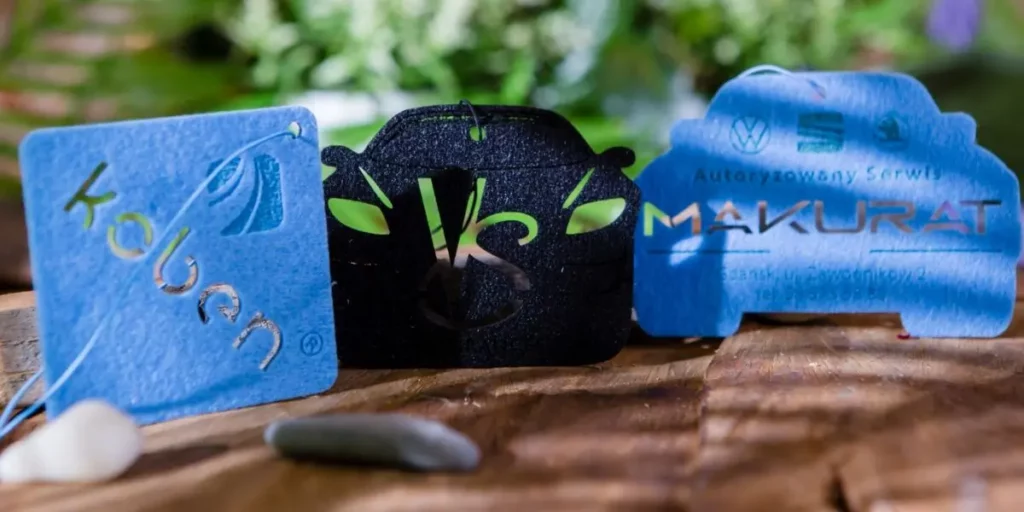
Printed logos serve dual purposes: they reinforce brand identity whilst creating visual interest in an otherwise utilitarian product. Companies can position their branding prominently on hanging fresheners, turning every vehicle into a mobile advertisement. High-resolution printing techniques allow for intricate detail reproduction, ensuring logos remain crisp and recognisable throughout the product’s lifespan.
Personal images offer emotional connections that generic designs cannot match. Custom photo fresheners featuring family portraits, pet pictures, or memorable holiday snapshots transform functional items into sentimental keepsakes. The printing process must account for material porosity—images on paper-based fresheners require protective coatings to prevent fragrance oils from degrading ink quality over time.
Key considerations for image customisation:
UV-resistant inks prevent fading from sunlight exposure
Waterproof coatings protect against humidity and temperature fluctuations
Print placement should avoid areas with maximum fragrance oil concentration
Colour contrast ensures visibility in varying light conditions inside vehicles
Designing Unique Shapes for Visual Appeal and Practicality
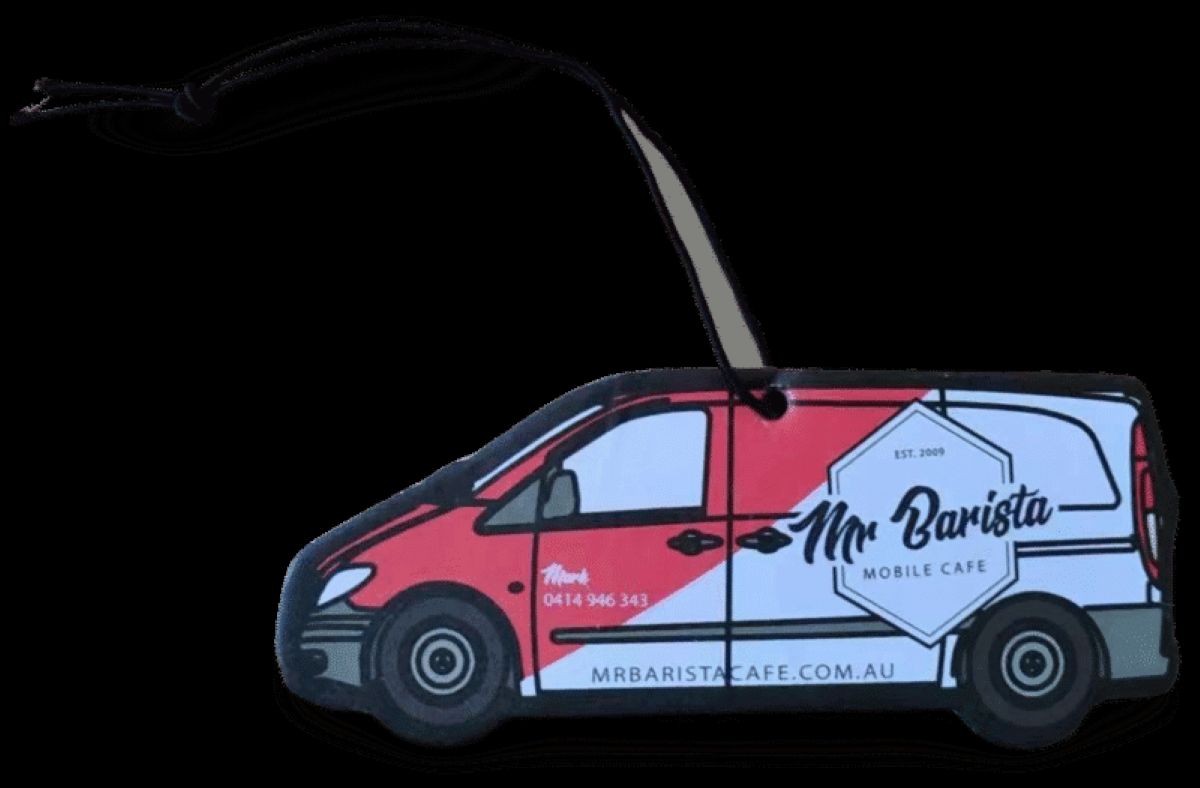
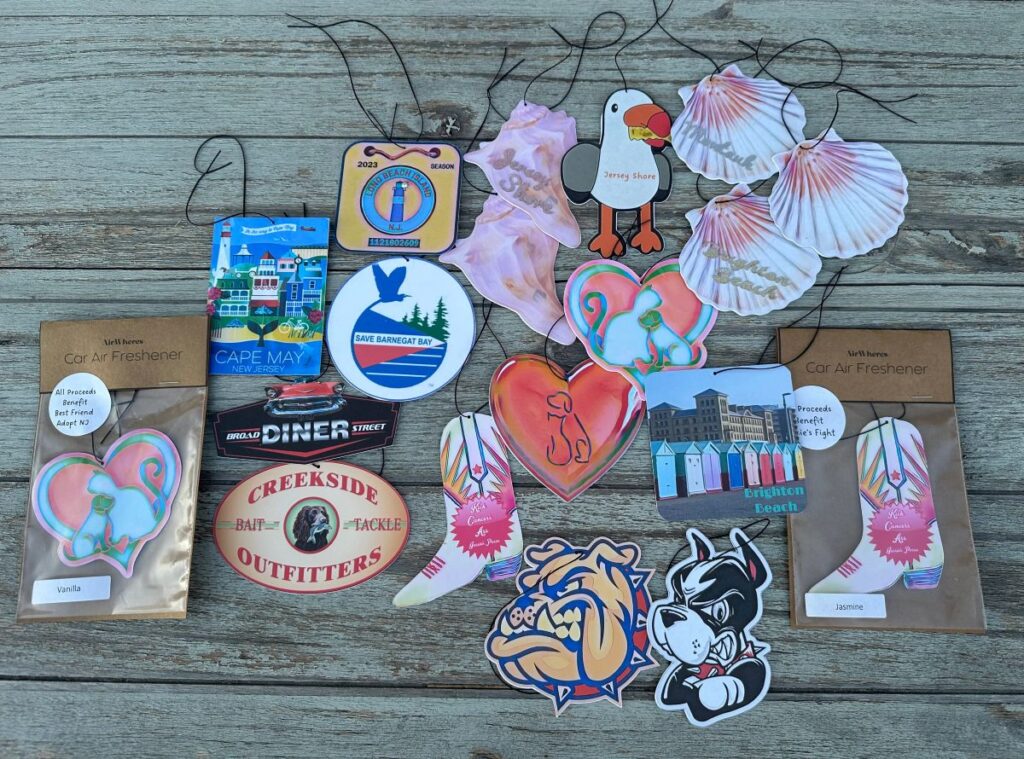
Shape selection directly influences both aesthetic impact and functional performance. Traditional tree-shaped fresheners remain popular due to familiarity, yet custom shapes create stronger brand associations and user engagement. A coffee shop might choose cup-shaped fresheners, whilst automotive brands could opt for miniature car silhouettes.
Practical considerations dictate certain shape limitations. Designs must accommodate hanging mechanisms without compromising structural integrity. Thin sections may tear easily, whilst overly thick areas can restrict airflow and reduce scent diffusion. The ideal shape balances visual distinctiveness with material efficiency—complex die-cut patterns increase production costs but deliver premium perceived value.
Surface area calculations prove essential in The Definitive Guide to Designing a Long-Lasting Custom Car Air Freshener. Larger surface areas expose more fragrance-infused material to air circulation, accelerating scent release. Designers must determine whether faster initial fragrance or extended longevity aligns better with target consumer preferences.
How Do Different Formats Affect Fragrance Release and User Experience in Car Air Fresheners?
The format you choose determines how fragrance disperses throughout the vehicle and how users interact with the product daily. Each design—whether hanging paper fresheners, vent clips, or aerosol sprays—offers distinct advantages in scent delivery, maintenance requirements, and aesthetic integration.
Why Hanging Paper Fresheners Remain Popular Despite Their Limitations
Hanging paper fresheners deliver fragrance through passive diffusion, requiring no power source or mechanical assistance. The scent-infused material releases aroma naturally as air circulates around it, creating a gentle, consistent fragrance presence. These designs excel in customisation potential, allowing for intricate die-cut shapes, full-colour printing, and creative branding opportunities that transform the freshener into a visual statement piece.
The primary drawback centres on scent intensity control. Users cannot adjust the fragrance strength beyond repositioning the freshener or removing it temporarily. Temperature fluctuations accelerate scent depletion in hot conditions, whilst cold weather can diminish aroma release significantly. The lifespan typically ranges from two to four weeks under normal conditions, though premium materials and quality fragrance oils extend this duration.
Promotional campaigns requiring high-volume distribution
Designs prioritising visual impact and brand recognition
Vehicles with adequate air circulation through open windows or ventilation systems
How Vent Clips Optimise Fragrance Distribution Through Active Airflow
Vent clips attach directly to air conditioning or heating vents, leveraging the vehicle’s climate control system to disperse fragrance. This active distribution method creates more consistent scent coverage throughout the cabin compared to passive hanging designs. Users gain precise control over intensity by adjusting vent airflow or rotating the clip’s exposure angle.
The format accommodates both refillable cartridges and disposable units. Refillable versions reduce waste and allow scent switching without replacing the entire mechanism, appealing to environmentally conscious consumers. The compact design maintains a low profile, avoiding the visual obstruction that larger hanging fresheners might create.
Challenges include compatibility issues with different vent styles. Horizontal slat vents, vertical designs.
What Manufacturing Considerations Support Efficient Production Without Sacrificing Quality in Car Air Fresheners?
Ease of Design Tools for Custom Orders
Ease of design tools directly determines how quickly manufacturers can respond to custom orders and market demands. Modern digital design platforms enable clients to upload logos, select shapes, and preview their air fresheners within minutes rather than days. Template-based systems with drag-and-drop functionality eliminate the need for specialised graphic design knowledge, allowing businesses to create professional-looking products without extensive technical training.
Streamlined Approval Process through Cloud-Based Interfaces
Cloud-based design interfaces streamline the approval process by enabling real-time collaboration between clients and manufacturers. These systems automatically check design specifications against production capabilities, flagging potential issues like insufficient image resolution or incompatible colour profiles before production begins. This pre-production validation reduces costly errors and minimises back-and-forth communication.
Balancing Speed with Material Integrity
Production speed becomes meaningless if the final product fails to retain its fragrance or deteriorates quickly. Automated cutting machines can process hundreds of air fresheners per hour, yet the material must still undergo proper fragrance saturation periods. Rushing the infusion process creates uneven scent distribution, resulting in products that smell strong initially but fade within days.
Quality control checkpoints throughout the production line ensure consistency without significantly slowing output. Strategic testing at three key stages catches defects early:
Post-cutting inspection: verifies shape accuracy and material integrity
Pre-packaging assessment: validates scent strength and visual quality
Preserving Scent Potency During Mass Production
Scent potency preservation requires careful environmental control throughout manufacturing. Temperature fluctuations during production can cause fragrance oils to evaporate prematurely or absorb unevenly into materials. Climate-controlled facilities maintain consistent humidity levels between 40-60% and temperatures around 20-22°C, creating optimal conditions for fragrance retention.
Sealed packaging immediately after production prevents scent degradation before products reach customers. Vacuum-sealed or foil-wrapped individual units lock in fragrance molecules that would otherwise dissipate during storage and shipping. This protective barrier extends shelf life from weeks to months without compromising the initial scent intensity. You may like to visit https://willrettflowerco.com/top-5-applications-for-custom-sweatbands-in-sports-and-corporate-events/ to get more about top 5 applications for custom sweatbands in sports and corporate events.
How Can Designers Ensure Their Custom Car Air Fresheners Remain Effective Over Time?
Designers maintain long-term effectiveness through strategic scent embedding techniques and rigorous durability testing. The fragrance must penetrate deep into the material’s fibrous structure rather than sitting on the surface, ensuring gradual release over weeks or months instead of rapid evaporation within days.
What Are the Most Effective Scent Embedding Techniques?
Absorption saturation involves soaking base materials in concentrated fragrance oils until the fibres reach maximum capacity. Recycled paper and felt materials work particularly well with this method, as their porous structure creates microscopic pockets that trap and slowly release aromatic compounds. The material should absorb between 15-25% of its weight in fragrance oil for optimal longevity. This technique often employs an absorbent core to enhance effectiveness.
Microencapsulation technology represents a more advanced approach where fragrance molecules are enclosed in tiny polymer shells. These capsules break down gradually through friction, temperature changes, and air exposure, releasing scent incrementally. This technique extends freshener lifespan by 40-60% compared to standard absorption methods.
Layered infusion applies fragrance in multiple stages during manufacturing. The first layer penetrates deepest into the material, whilst subsequent applications create surface-level scent for immediate impact. This multi-tiered approach ensures the freshener maintains noticeable fragrance throughout its entire lifespan rather than fading prematurely.
Which Slow-Release Materials Deliver the Best Results?
Natural fibres like cotton, hemp, and recycled paper excel at controlled fragrance distribution. Their cellular structure creates natural barriers that regulate scent molecules’ escape rate. Felt materials particularly stand out, offering 30-45 days of consistent aroma when properly saturated with quality oils.
Polymer-based substrates provide different advantages. EVA (ethylene-vinyl acetate) foam and PVC materials release fragrance through thermal activation—the car’s interior heat accelerates scent diffusion whilst cooler temperatures preserve the remaining oils. This temperature-responsive behaviour matches real-world usage patterns perfectly.
Wood-based options like bamboo or cedar offer dual functionality. These materials possess inherent pleasant aromas whilst their dense grain structure holds embedded fragrances for extended periods.
Conclusion
Creating long-lasting custom air fresheners requires attention to every detail covered in this definitive guide. Your success depends on making informed choices about materials, fragrances, formats, and manufacturing processes that work together harmoniously.
The best designs emerge when you prioritise quality at each stage. Select eco-friendly materials that retain fragrance effectively, choose oils formulated for gradual release, and test your prototypes rigorously before full production. Your customisation choices should enhance both visual appeal and functional performance.
Apply these best practices consistently:
Match materials to your target lifespan goals – recycled paper for standard use, specialised substrates for extended performance
Balance fragrance intensity with longevity – stronger initial scents fade faster than carefully calibrated formulations
Design shapes that optimise air circulation whilst maintaining brand identity
Test under realistic conditions to verify your freshener performs as promised
Your customers expect air fresheners that deliver pleasant aromas throughout their advertised lifespan. When you implement the strategies outlined in The Definitive Guide to Designing a Long-Lasting Custom Car Air Freshener, you create products that exceed expectations and build lasting brand loyalty.
The difference between mediocre and exceptional custom air fresheners lies in your commitment to quality materials, thoughtful fragrance selection, and rigorous testing. Start with these proven principles, refine your approach through customer feedback, and watch your designs transform ordinary car interiors into personalised, fragrant spaces that drivers genuinely appreciate.

 Henry Eipper on